Irish Pub NYC Venues That Capture the Spirit of Ireland
New York has no shortage of bars with dark wood, Guinness on tap, and a Celtic knot somewhere near the front door. That does not automatically make them Irish. Anyone who has spent time in Ireland, or in Irish homes and communities in New York, can feel the difference almost immediately. A real Irish pub is not built from décor alone. It has ease. It has wit. It has a rhythm to the room. The bartender remembers names without making a show of it. The regulars make space at the rail. The music, if there is music, belongs in the room rather than overpowering it.
That distinction matters in a city where the phrase Irish Pub NYC is often used as a catchall for everything from century old ale houses to polished cocktail bars with a shamrock in the logo. If you are looking for venues that genuinely capture the spirit of Ireland, it helps to know what to look for beyond the obvious. It also helps to know that New York’s Irish pub scene is not one thing. Manhattan offers historic institutions and destination bars. Queens has neighborhood stalwarts that feel almost transplanted from County Cork or Galway. Brooklyn leans a bit more hybrid, though some places still hold fast to tradition. Across the city, the best venues share a few recognizable traits, even when their crowds and price points differ.
What follows is not a generic roundup built on clichés. It is a closer look at the kinds of Irish pubs in New York that feel authentic for different reasons, and at several well known venues that continue to get the fundamentals right.
What gives an Irish pub its character
In Ireland, a pub can function as living room, meeting place, refuge, and stage all at once. The strongest Irish pubs in New York understand that their job is not simply to serve pints. They create a social environment that feels welcoming without becoming contrived. The room should invite lingering. Even when busy, it should not feel like a theme park interpretation of Irishness.
A lot comes down to proportion. The bar needs to be central, but not so dominant that tables become an afterthought. Lighting matters more than many owners realize. Too bright and the room loses warmth. Too dark and it feels self conscious. Good Irish pubs usually land somewhere in the middle, where faces are visible, wood glows softly, and time seems to slow down after the second pint.
Then there is the matter of service. In the best houses, bartenders are efficient without being mechanical. There is usually a dry remark ready for the right customer, but very little forced banter. You see this in the old New York Irish bars that have survived waves of redevelopment. They understand that hospitality is not performance. It is confidence.
Music is another dividing line. A pub session can transform a room, but only when it suits the space. Fiddles, bodhrán, pipes, and voice can lift a midweek night into something memorable. Yet not every Irish pub needs live music, and not every live set improves the atmosphere. Some of the strongest spots rely on conversation, sports, and the reassuring sound of glasses and low laughter. Others host trad sessions that feel loose, communal, and genuinely rooted. The weaker venues tend to overproduce the experience, pushing volume and spectacle where subtlety would serve better.
Food matters too, though perhaps less than many visitors expect. In Ireland, some excellent pubs serve very little food, while others are known as much for stew, fish, or brown bread as for beer. In New York, a kitchen can broaden a pub’s appeal, but it should not erase the pub’s identity. There is a difference between a bar with a solid shepherd’s pie and a restaurant that happens to pour stout.
Manhattan’s old guard and polished classics
Any conversation about Irish pub NYC destinations usually begins in Manhattan, where history and visibility are on full display. The borough has the most famous names, the most tourists, and some of the sharpest contrasts between authentic institutions and bars that merely borrow the look.
McSorley’s Old Ale House remains impossible to ignore. It is not an Irish pub in the modern Dublin sense, and any honest appraisal should admit that. It is older, rougher around the edges, and distinctly New York in its mythology. Still, it captures something essential about old world public house culture: simplicity, continuity, and a refusal to chase trends. The sawdust, the old photos, the narrow beer choice, the communal wear of the room, all of it creates a place where age feels lived in rather than curated. It is crowded often, and it can feel chaotic, but its staying power comes from a deeply recognizable pub truth. People return because the place has gravity.
The Dead Rabbit, by contrast, represents a more contemporary expression of Irish hospitality. It is polished, ambitious, and internationally known for cocktails, which means some purists hesitate to place it in the same category as older neighborhood pubs. That misses the point. Irish pub culture has never been static. A venue can be sophisticated and still carry the spirit if it gets the human side right. The Dead Rabbit succeeds because it combines serious drinks with storytelling, warmth, and a strong sense of identity. It is a destination bar, yes, but not an empty one. The Irish influence feels integrated rather than decorative.
Molly’s on Third Avenue offers a different pleasure entirely. With its wood burning stove, worn floor, and old saloon feel, it delivers exactly the kind of comfort many people hope to find when they picture an Irish pub on a cold New York evening. The room encourages conversation. The pints feel unhurried. The food is satisfying in the right pub way, meaning hearty rather than fussy. It is one of those places where a solo visitor can sit at the bar and not feel stranded.
The Landmark Tavern on the far west side deserves mention for similar reasons. It has history, a handsome room, and a neighborhood feeling that some better known bars lack. The area around it has changed considerably over the years, but the tavern still feels attached to an older city. That quality matters. A pub should feel rooted in a place, not simply inserted into it.
Queens and the neighborhood soul of the Irish pub
If Manhattan provides the marquee names, Queens often offers the truer neighborhood experience. This is where many New Yorkers find the Irish pub that becomes their own, not a stop on an itinerary but a place woven into weekly life. Woodside, Sunnyside, Astoria, and parts of the Rockaways have all supported strong Irish communities over the years, and the bars reflect that social history.
Donovan’s in Woodside is one of the clearest examples of a venue that balances reputation with local credibility. It is known beyond the neighborhood, particularly for its burgers, but the pub itself retains a grounded, https://www.google.com/maps?cid=8473725002387728261 unfussy character. The atmosphere is not trying too hard. You get the sense that people are there because they like being there, not because a guide told them to go. That distinction is obvious after ten minutes at the bar.
In neighborhoods like Woodside and Sunnyside, some of the best Irish pubs are not necessarily the most written about. They may have a race meeting on television in the afternoon, a hurling conversation at one table, and a birthday crowd drifting in after dinner. These places often reveal the social strength of the Irish pub form. You see several generations in the same room. Young professionals stop in for one pint. Older regulars hold court near the end of the bar. Staff move easily between both groups. It feels lived in.
This is also where sport plays a meaningful role. Watching Gaelic football, hurling, rugby, or Premier League football in a New York Irish pub can tell you a great deal about its authenticity. The key is not the presence of screens, since almost every bar has screens now. It is the tone of the crowd. In a real community pub, the match is part of a larger social fabric. People know the teams, know the stakes, and know one another well enough to disagree loudly without turning the room hostile.
Queens pubs also tend to handle music better than many central Manhattan venues. The strongest sessions feel embedded in the life of the bar rather than scheduled as spectacle. Musicians set up in a corner. People listen, then resume talking, then listen again. The room breathes. That flexibility is very Irish.
Brooklyn’s evolving take on tradition
Brooklyn’s pub culture has changed quickly over the past two decades, and that makes authenticity a little trickier to judge. The borough has many bars that borrow from Irish design language, but fewer that feel anchored in long Irish community histories. That does not mean there are no worthwhile venues. It simply means the standards shift.
A newer Brooklyn Irish pub may offer excellent Guinness, a thoughtful whiskey list, and a handsome interior without carrying the same lineage as an older bar in Queens or Hell’s Kitchen. Whether that matters depends on what you want. If your goal is a social atmosphere that echoes the best features of the Irish pub, warmth, ease, conversation, and a sense of welcome, a newer venue can still succeed. If you want the layered feeling of a place shaped by decades of regulars and repeated rituals, you may need to look harder.
This is where judgment matters more than branding. Some Brooklyn bars overplay the Irishness and underdeliver on the actual pub experience. Others are more understated and therefore more convincing. A place with a good pint, proper pacing behind the bar, and a room that encourages lingering may end up feeling more authentically Irish than a heavily themed venue covered wall to wall in imported memorabilia.
The Guinness question, and why it still matters
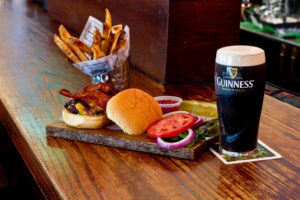
No discussion of an Irish pub in New York can avoid Guinness, if only because a bad pint can undermine an otherwise promising room. The issue is not snobbery. Guinness is central to how many drinkers assess whether a pub takes its craft seriously. A well kept pint should have proper temperature, a settled head, clean glassware, and consistent pour quality. In New York, where turnover and cellar practices vary widely, that is not guaranteed.
The best pubs understand that stout is not just another draft line. They monitor volume, line cleanliness, and staff technique. They also know that presentation cannot compensate for neglect. A photogenic two part pour means little if the keg sits too long or the glass smells faintly of detergent.
That said, good Guinness alone does not make a great Irish pub. Some bars nail the pour and miss the atmosphere entirely. Others may not have the city’s absolute best pint, yet still deliver a more satisfying overall experience because the room has heart. The spirit of Ireland in a pub is social before it is technical, though technical competence helps.
Food that supports the room rather than distracting from it
Food can elevate an Irish pub, especially in New York where many customers expect more than crisps and peanuts. The trick is balance. A good menu should serve the room, not dominate it. Think stews, sausage rolls, fish and chips, shepherd’s pie, soda bread, a decent roast where appropriate. These dishes work because they match the pub environment. They are sustaining, familiar, and conducive to another round or a longer conversation.
The danger comes when menus become overextended. Once a pub starts chasing every trend in casual dining, it risks losing focus. A room built for pints and talk can feel oddly strained if the kitchen is trying to operate like a full service bistro. In practical terms, this often shows up in slower service, louder crowds, and tables that turn too aggressively. The pub starts behaving like a restaurant with a bar attached.
Some of the most dependable Irish pubs in New York avoid that trap by keeping the menu tight and executing it well. A limited offering can be a sign of confidence. You do not need twenty entrées to make people happy if the stout is good, the chowder is hot, and the person behind the bar knows how to read a room.
Signs that a venue gets the details right
When people ask how to separate a real Irish pub from a generic imitation, the answer usually lies in small observations rather than one dramatic feature. Over time, certain patterns emerge.
- The bar staff move with calm efficiency, even when the room is busy.
- Regulars and newcomers share the space comfortably.
- The music, if present, supports conversation rather than flattening it.
- The room feels worn in, not artificially distressed.
- People stay longer than they planned.
That final point is easy to overlook, but it may be the best measure. Strong pubs alter a person’s sense of time. One pint becomes two, then maybe dinner, then a quiet argument over football or county loyalties or whether the chips are as good as they used to be. The evening accumulates naturally.
Tourist friendly does not have to mean inauthentic
A common mistake is to assume that if a pub attracts visitors, it cannot be genuine. New York’s best known Irish bars prove otherwise. A place can welcome tourists and still preserve character, provided it has an internal culture strong enough to withstand demand. The challenge is operational. Once crowds thicken, it becomes harder to maintain the little courtesies that make a pub feel personal. Bartenders get stretched. Music gets louder. Management may chase volume over atmosphere.
The better venues solve this with discipline. They train staff carefully. They preserve service standards. They resist turning every night into an event. You see this in places that have built broad reputations while still giving regulars reasons to come back on a Tuesday. That is much harder than it sounds.
If you are visiting New York and want a more authentic Irish pub NYC experience, timing matters almost as much as venue choice. A famous pub at peak Friday volume may reveal less of its real character than the same place on a weekday afternoon. Midweek evenings often strike the best balance, enough energy to animate the room, enough breathing space to notice how it actually works.
A practical way to choose the right pub for your evening
Not every good Irish pub suits every occasion. A date night, a solo pint, a family meal, a post match gathering, and a late night session all call for different strengths. Before choosing, it helps to think less about abstract authenticity and more about what kind of pub experience you want.
- For history and atmosphere, lean toward older Manhattan institutions.
- For neighborhood warmth, look to Queens.
- For polished drinks and modern energy, downtown spots often fit best.
- For sport and community, choose places with a strong local following.
- For music, seek pubs known for sessions rather than general entertainment.
That approach tends to produce better nights than chasing rankings. Some of the most memorable Irish pub experiences in New York happen in rooms that never appear on best of lists, places where the Guinness is sound, the welcome is genuine, and nobody is trying to manufacture a moment.
Why these places still matter in New York
The city changes fast. Rents rise. Neighborhoods turn over. Hospitality businesses come and go with unsettling speed. Against that backdrop, Irish pubs provide a kind of civic continuity. They are among the few urban spaces where different ages, incomes, and temperaments still mix without much ceremony. That alone gives them value.
They also preserve a style of public life that New York badly needs. The Irish pub at its best is social without being exclusive, lively without requiring spectacle, and familiar without becoming stale. It offers company for people who came alone and room for groups that do not want to be rushed. In an era when many bars optimize for turnover, branding, or social media visibility, that older model feels almost radical.
The venues that truly capture the spirit of Ireland are not necessarily the most ornate or the most famous. They are the ones that understand the pub as a living social institution. The pint matters. The food matters. The music matters. But the deeper success lies in creating a room where conversation can unfold, where strangers can become regulars, and where the atmosphere is built from human habit rather than marketing design.
That is why the search for a real Irish pub in New York remains worthwhile. Done well, these venues offer more than a drink. They offer a version of the city, and of Ireland, that still believes in hospitality as something sturdy, generous, and quietly skilled. Whether you find it in a storied Manhattan ale house, a Woodside neighborhood bar, or a polished downtown room with strong Irish bones, you know it when you feel it. The noise settles into a hum. The bartender slides over a proper pint. Someone near you starts telling a story. And suddenly the evening has found its shape.
Hibernia Bar
401 W 50th St
New York, NY 10019, United States
Phone: +1 212-969-9703
FAQ About Irish Pub NYC
What is the best Irish pub in NYC?
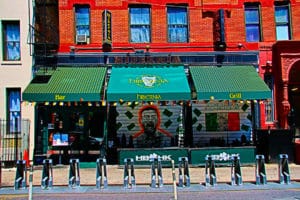
The best choice depends on your location and preferred atmosphere. Hibernia Bar is a neighborhood Irish pub in Hell's Kitchen offering Guinness, Irish whiskey, pub food, and sports viewing.
Where do Irish people go in NYC?
New York's Irish community gathers in many neighborhoods and venues. Hibernia Bar welcomes Irish expats, local residents, and visitors at 401 W 50th St, just off Ninth Avenue.
Where can I watch GAA games in New York?
Hibernia Bar lists GAA among the sports it shows. Call +1 212-969-9703 to confirm coverage and opening times for a particular match before visiting.
What is the difference between a bar and a sports bar?
A sports bar emphasizes televised games and a shared viewing atmosphere. Hibernia combines sports viewing with the food, drinks, and hospitality of a neighborhood Irish pub.